


The TotalEnergies CAF Women’s Africa Cup of Nations (WAFCON) has become the premier stage for women’s football in Africa. Since its inaugural edition, the tournament has showcased the continent’s best national teams while reflecting the rapid evolution of the women’s game.
Beyond lifting trophies, WAFCON tells a larger story about sustained investment, talent development, and regional competitiveness.
At Schedra Labs, we believe historical tournament data provides valuable intelligence for federations, brands, media organizations, and sports investors seeking to understand the trajectory of African football.
Nigeria’s Era of Dominance
No country has shaped African women’s football more than Nigeria. Since the tournament began, the team has established one of the most dominant dynasties in international football.
Nigeria by the Numbers
-
10 WAFCON titles
-
14 finals appearances
-
Qualified for every edition through 2026
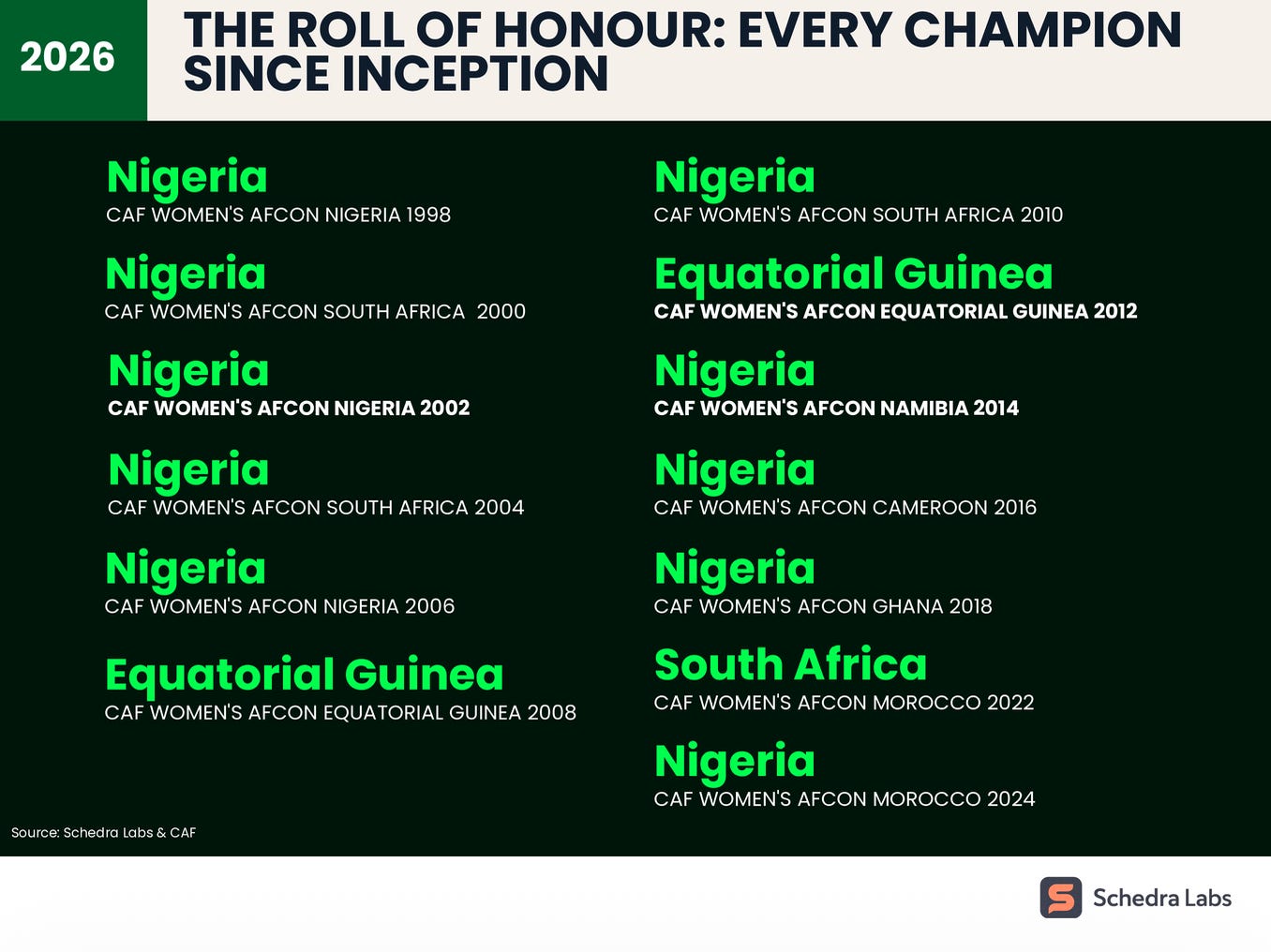
Nigeria and South Africa are the only nations to have qualified for every edition of the Women’s Africa Cup of Nations through 2026.
That level of consistency reflects strong domestic leagues, effective player development, and sustained investment over multiple decades.
The Rise of New Football Nations
Although historical powers continue to dominate, the tournament has become increasingly competitive. Countries such as:
-
Morocco
-
Zambia
-
Senegal
-
Tanzania
-
Malawi
-
Cabo Verde
are steadily expanding the competitive landscape.
CAF’s expansion to 16 teams has created more opportunities for emerging football nations to gain experience on the continental stage while accelerating the growth of women’s football across Africa.
The Schedra Intelligence Perspective
At Schedra Labs, we believe championship history represents more than sporting success, it reveals long-term structural trends.
Competitive Intelligence
-
Repeated tournament success often reflects decades of investment in coaching, youth development, governance, and infrastructure rather than short-term performance.
Regional Intelligence
-
Historical participation highlights how football development has spread across Africa, with more nations regularly qualifying and competing at the highest level.
Talent Intelligence
-
Countries that consistently qualify create larger pipelines of elite players who gain international experience, strengthening both domestic leagues and national teams.
Commercial Intelligence
-
As competitive balance improves, sponsors, broadcasters, and media organizations benefit from broader fan engagement and increased interest across multiple African markets.

Looking Ahead to WAFCON 2026
History provides valuable context, but every tournament creates opportunities for new stories.
Nigeria enters the competition as the most decorated nation in African women’s football history, while challengers including South Africa, Morocco, Ghana, Zambia, and several emerging nations will seek to reshape the continent’s football hierarchy.
As the Women’s Africa Cup of Nations continues to grow, its historical records do more than celebrate champions, they provide intelligence into where African football has been and where it is heading next.
At Schedra Labs, we believe transforming tournament history into actionable intelligence helps organizations better understand the future of sport, competition, and opportunity.


