

Women’s football in Africa is entering a defining moment. The TotalEnergies CAF Women’s Africa Cup of Nations (WAFCON) 2026 is more than another continental tournament. It is the largest edition in the competition’s history, bringing together 16 national teams, 368 players, and 32 matches across Morocco. More importantly, it reflects the accelerating investment, competitiveness, and commercial growth of women’s football across the continent.
At Schedra Labs, we believe tournaments should be analyzed not only through results but also through the intelligence behind them. By combining tournament data with regional insights and emerging trends, organizations can better understand where African football is heading.
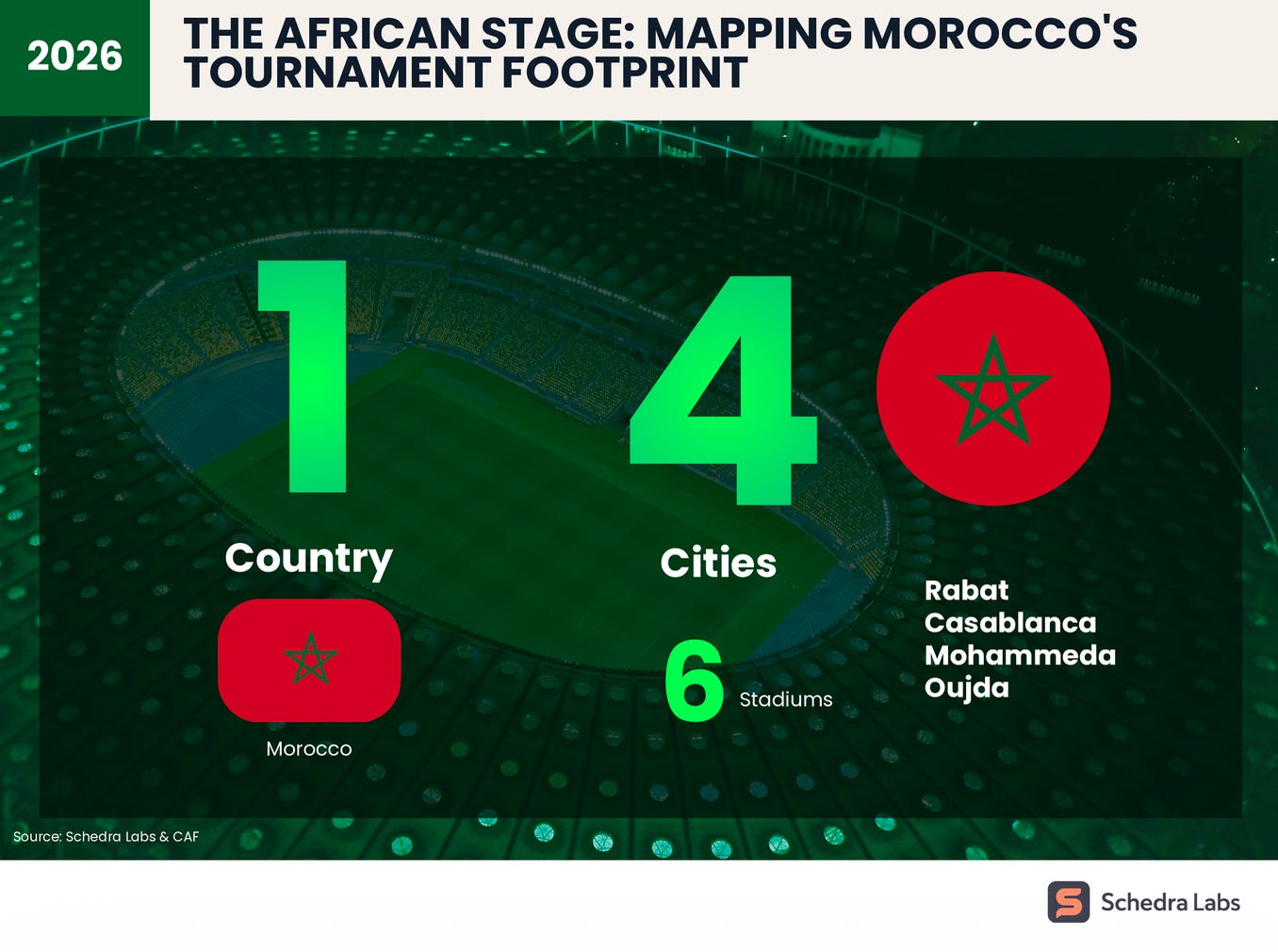
Morocco Becomes the Center of African Women’s Football
Morocco will once again host Africa’s biggest women’s football competition, reinforcing its position as one of the continent’s leading football destinations.
A Bigger Tournament Than Ever Before
CAF has expanded the Women’s Africa Cup of Nations from 12 to 16 teams, making the 2026 edition the largest in tournament history.
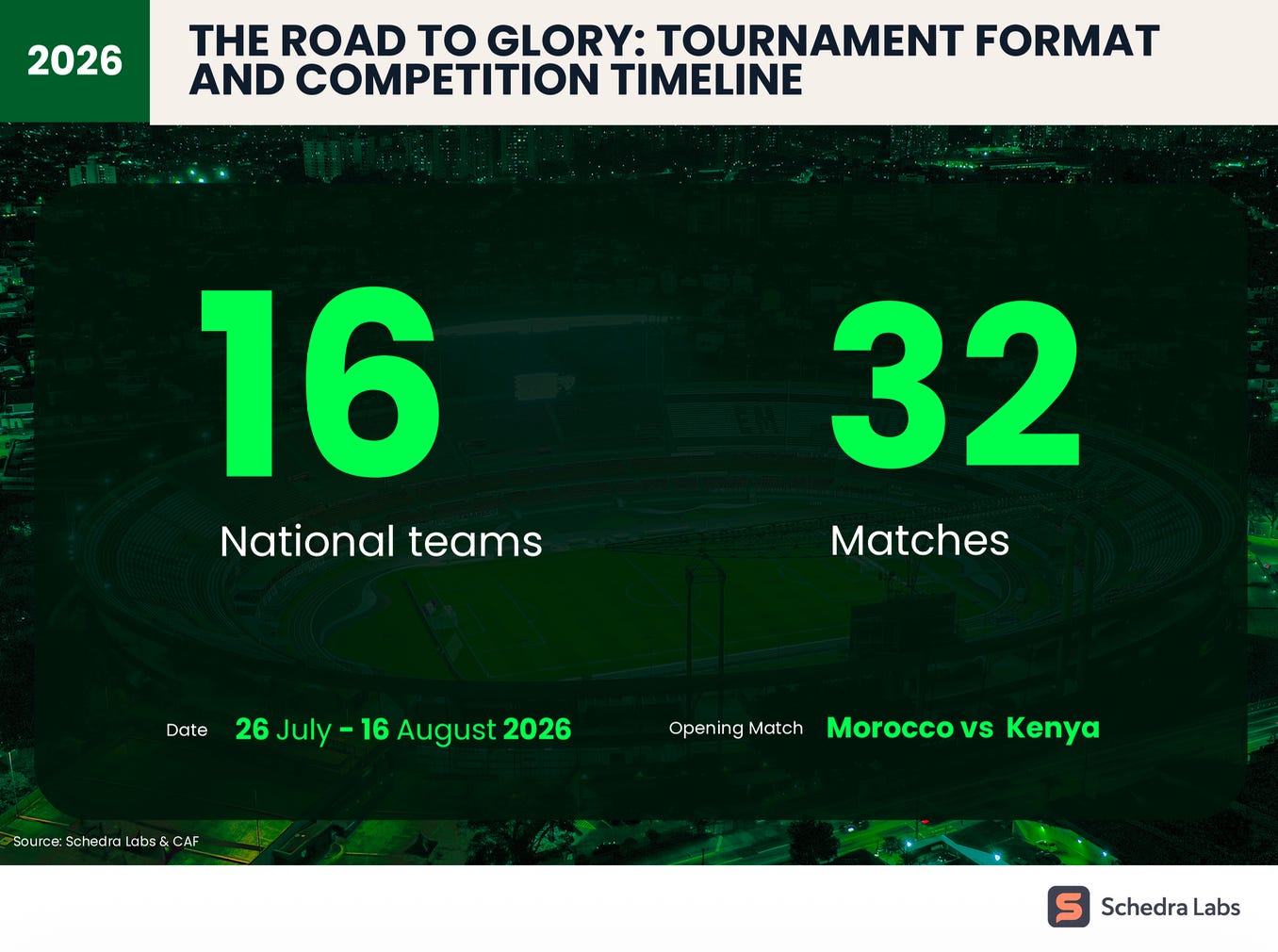
The tournament runs from 26 July to 16 August 2026, with the opening match featuring Morocco vs. Kenya. The expansion reflects the rapid growth of women’s football across Africa, creating more opportunities for emerging nations while increasing the tournament’s commercial and broadcast value.
Regional Representation Reveals Africa’s Competitive Landscape
One of the tournament’s most interesting stories is how qualification is distributed across Africa.
West Africa Leads the Continent
West Africa contributes seven national teams, making it the strongest represented region.
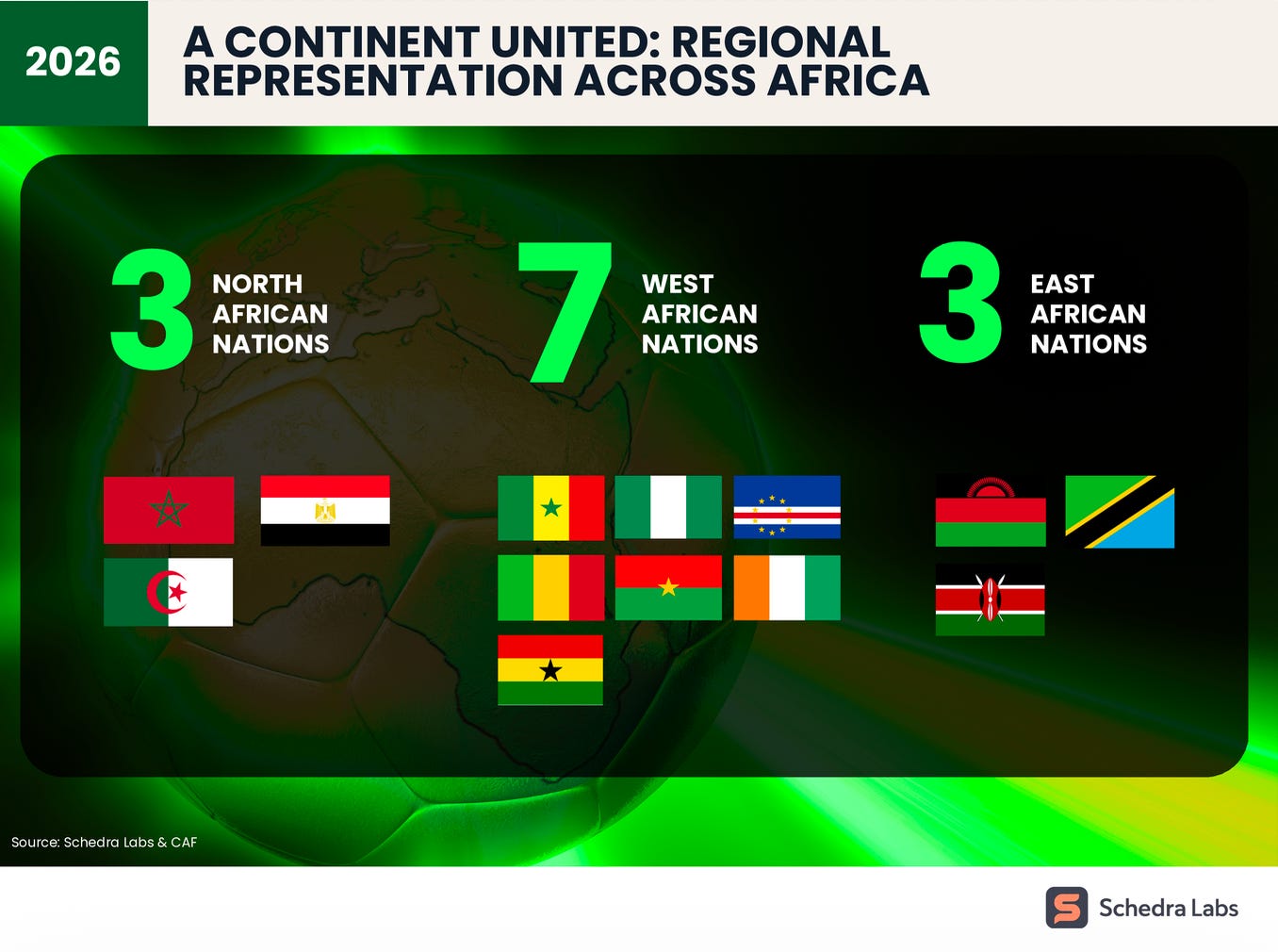
Morocco’s continued investment in football infrastructure has positioned the nation as one of Africa’s fastest-growing football markets. This concentration reflects decades of investment in women’s football and highlights the region’s growing depth of talent.
Southern and Central Africa
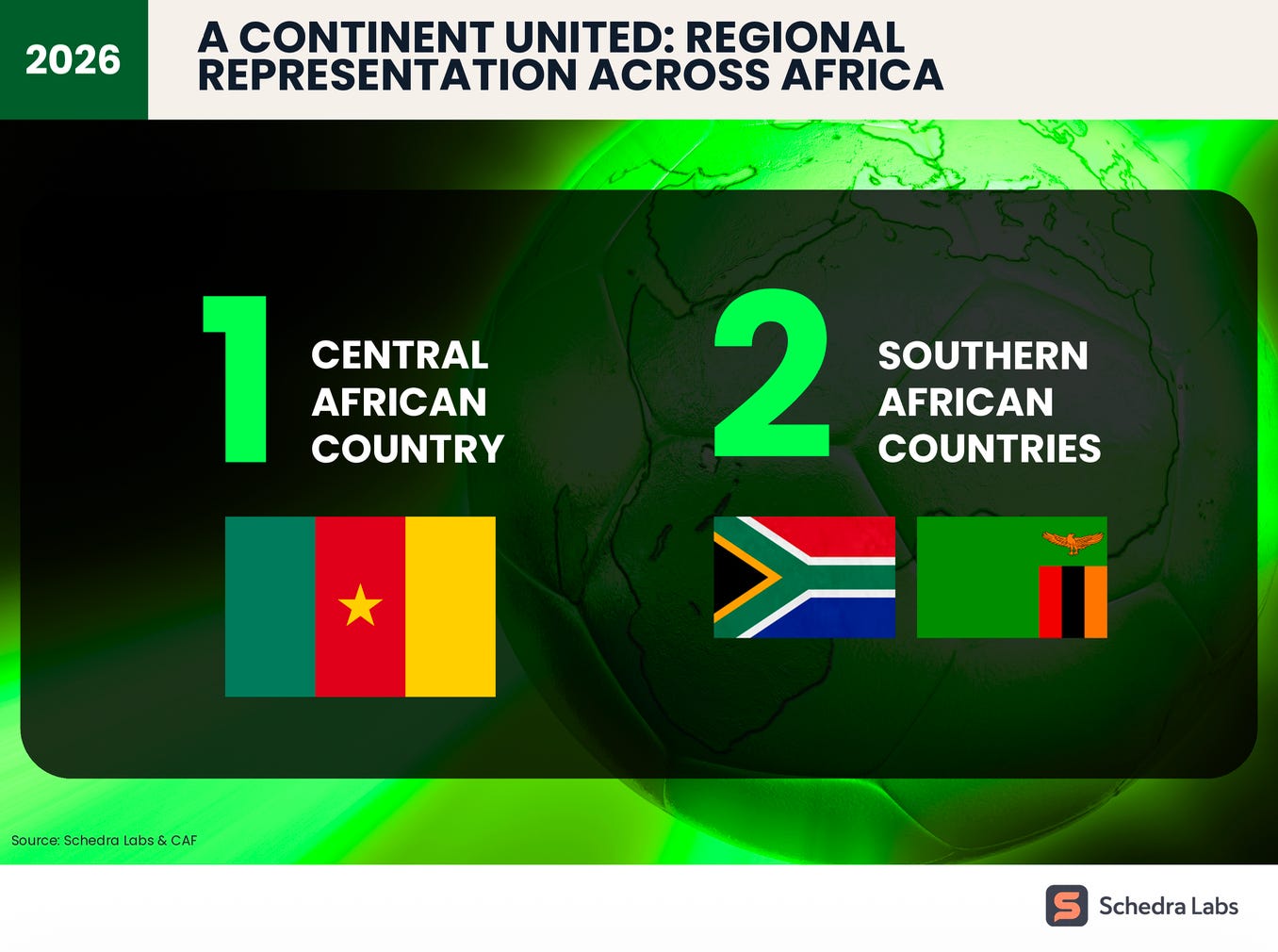
Although fewer nations qualified from these regions, several remain among the continent’s strongest football programs.
368 Players Driving the Tournament
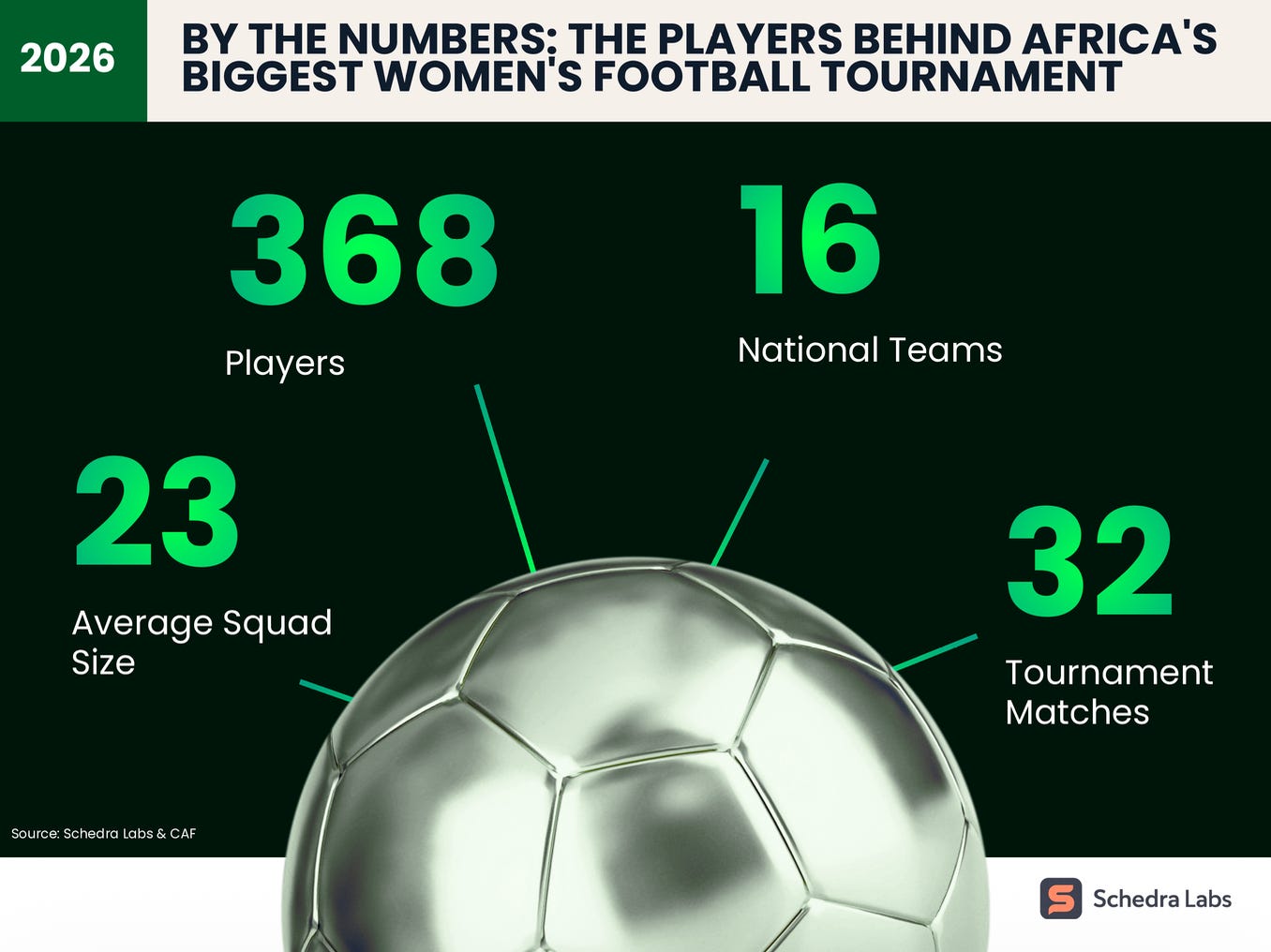
Once CAF publishes the complete squad database, additional intelligence will become available, including:
-
Average squad age
-
Youngest and oldest players
-
Clubs represented
-
Domestic vs. overseas-based players
-
League diversity across Africa and internationally
These datasets provide valuable insight into player development pathways and the globalization of African women’s football.
The Schedra Intelligence Perspective
At Schedra Labs, we believe tournaments are more than sporting events, they are intelligence ecosystems. Every competition generates valuable signals across multiple dimensions:
Geographic Intelligence
-
Regional participation reveals where investment in women’s football is accelerating and where emerging talent pipelines are developing.
Talent Intelligence
-
Squad composition, player age, league representation, and international experience help identify future stars and long-term development trends.
Infrastructure Intelligence
-
The distribution of host cities and stadiums highlights countries investing in facilities capable of hosting major international events.
Commercial Intelligence
-
Expanded tournaments create new opportunities for broadcasters, sponsors, brands, and technology companies seeking to engage one of the world’s fastest-growing sports audiences.
Looking Beyond the Trophy
The 2026 Women’s Africa Cup of Nations represents more than a championship. It reflects Africa’s expanding football ecosystem, growing investment in women’s sport, and increasing global visibility.
For federations, brands, sponsors, media organizations, and investors, understanding these structural trends will become just as important as following the results on the pitch.
As African football continues to evolve, intelligence, not just data, will help organizations identify opportunities, anticipate change, and make better decisions.
At Schedra Labs, we believe the future of sport belongs to those who can transform information into actionable intelligence.