

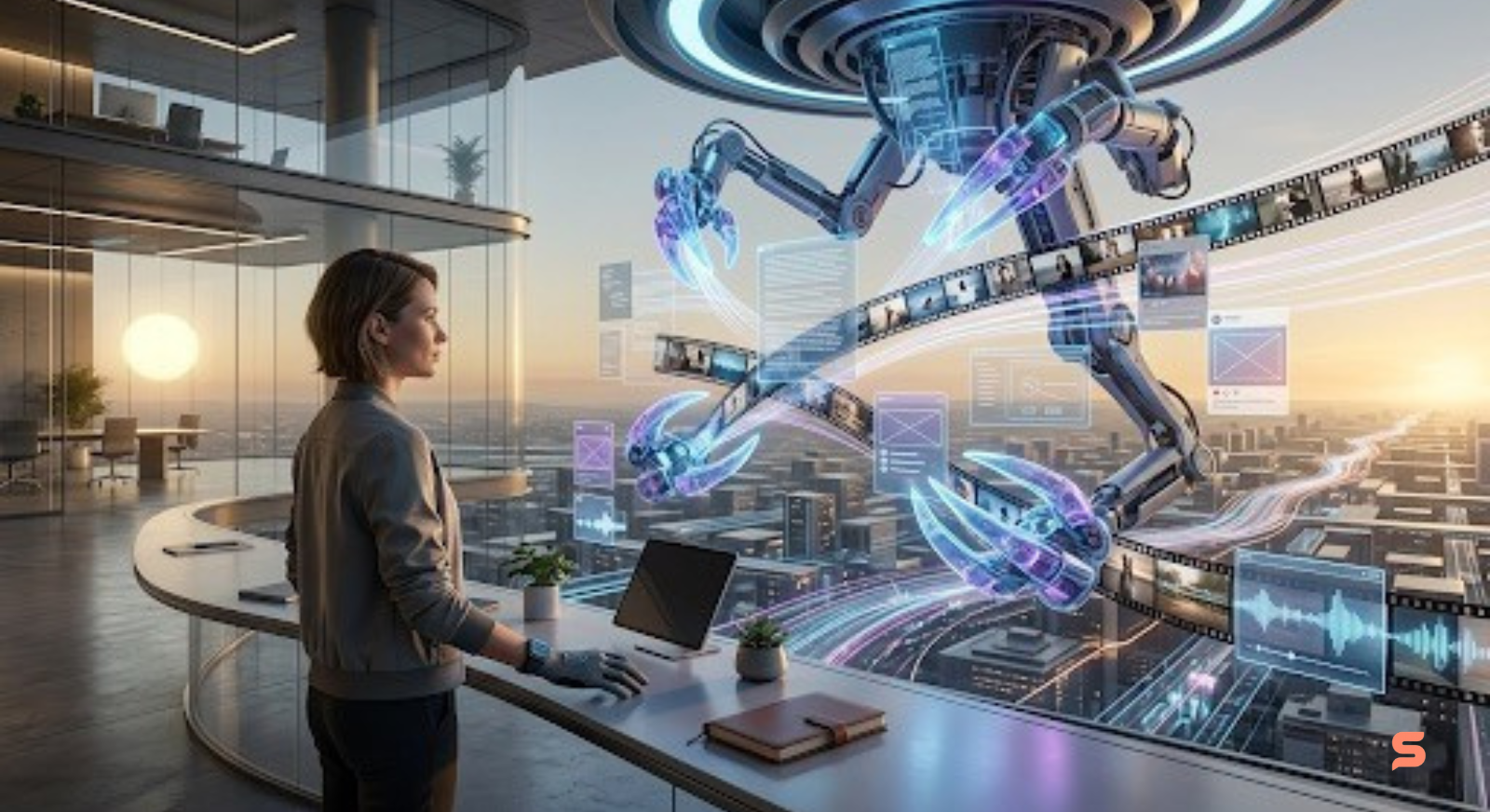
The Evolution of Content Creation
Content creation has transformed dramatically over the past decade. What once involved occasional blog posts or promotional graphics has become a constant, multi-format production cycle across platforms such as video, short-form content, newsletters, podcasts, and social media feeds. Today, creators and brands are expected to publish consistently, remain relevant to trends, personalize messaging, and analyze performance in real time.
This level of demand has made content creation both an opportunity and a bottleneck. The creative process must now coexist with operational efficiency. That is where autonomous AI agents like OpenClaw begin to play a pivotal role.
From Content Production to Content Systems
Traditional content workflows are linear. A creator generates an idea, produces the material, publishes it, monitors results, and then adjusts future content accordingly. This process is manual and time-intensive.
OpenClaw transforms this into a dynamic system. Instead of isolated actions, content creation becomes an adaptive loop. The agent can analyze audience data, identify emerging topics, generate content aligned with trends, distribute it strategically, and refine future output based on measurable performance indicators.
This creates a continuous cycle of creation, measurement, and optimization. The result is not just more content—but smarter content.
Intelligent Ideation and Trend Alignment
One of the most challenging aspects of content creation is consistently generating relevant ideas. Trends evolve rapidly, and audience interests shift quickly. OpenClaw can analyze social signals, engagement metrics, and keyword patterns to suggest content themes aligned with current demand.
Rather than brainstorming manually or reacting late to trends, creators can leverage OpenClaw to surface timely concepts. This reduces creative fatigue and increases strategic alignment with audience expectations.
Adaptive Writing and Multi-Platform Optimization
Different platforms require different tones, formats, and engagement strategies. A YouTube description differs from a LinkedIn post, and both differ from a short-form caption. OpenClaw can adapt content to each channel automatically, ensuring consistency in message while adjusting style and structure to fit platform norms.
This adaptability allows creators and brands to repurpose content efficiently without losing impact. A single core idea can evolve into multiple tailored outputs across platforms, increasing reach without multiplying workload.
Workflow Automation Through API Integration
A key advantage of OpenClaw lies in its ability to integrate through APIs with publishing platforms and content management systems. With proper integration, the agent can schedule posts, upload drafts, retrieve analytics, and update content strategies programmatically.
This reduces friction between ideation and execution. Instead of moving manually between writing tools, scheduling platforms, and analytics dashboards, OpenClaw can manage the entire pipeline. The content ecosystem becomes unified under a goal-driven AI workflow.
Performance-Driven Optimization
Creating content is only part of the equation; optimizing it is equally important. OpenClaw can monitor metrics such as engagement rates, watch time, click-through rates, and conversion data. Based on these signals, it can adjust content structure, timing, or thematic focus.
For example, if short-form videos perform better during specific hours or certain topics generate higher interaction, the agent can adapt future production accordingly. Over time, this data-driven refinement increases efficiency and output quality.
Supporting Human Creativity, Not Replacing It
Despite its advanced capabilities, OpenClaw does not replace human creativity. Instead, it augments it. Strategy, storytelling depth, emotional nuance, and brand identity remain human strengths. OpenClaw handles operational complexity, repetitive structuring, and analytical refinement.
This collaboration enables creators to focus on vision and originality while delegating process-heavy tasks to the AI agent. The result is a higher level of creative productivity without proportional increases in workload.
The Future of Autonomous Content Systems
As AI agents become more sophisticated, content creation will increasingly shift from manual production to intelligent orchestration. Instead of asking, “What should we post today?” teams will define strategic objectives, and autonomous systems will execute toward those goals continuously.
OpenClaw represents an early stage of this transformation. By combining contextual intelligence, workflow automation, and adaptive learning, it turns content creation into a scalable system rather than a reactive task list.
Final Thoughts
OpenClaw signals a structural change in how content is conceived, produced, and optimized. It moves beyond simple generation tools into the realm of autonomous content management. In an environment where speed, personalization, and consistency define success, intelligent agents offer a powerful advantage.
Content creation is no longer just about producing material—it is about building adaptive systems that evolve with audience behavior. OpenClaw positions itself at the center of this shift, enabling creators and brands to operate with intelligence, scale, and strategic clarity in a rapidly changing digital landscape.
See How AI Sees Your Brand
AI assistants are recommending brands in your category today. The only question is whether yours is in the answer. Schedra AI Visibility tracks how ChatGPT, Perplexity, Claude, Gemini and DeepSeek cite and recommend your brand, so you can close the gap before your competitors do.


